Alexander Traykov

Product designer

I design, code, build, ship, tinker, and have fun taking ideas from 0 to 1.

Pave

Designing a dot-patterns loading language for Pave

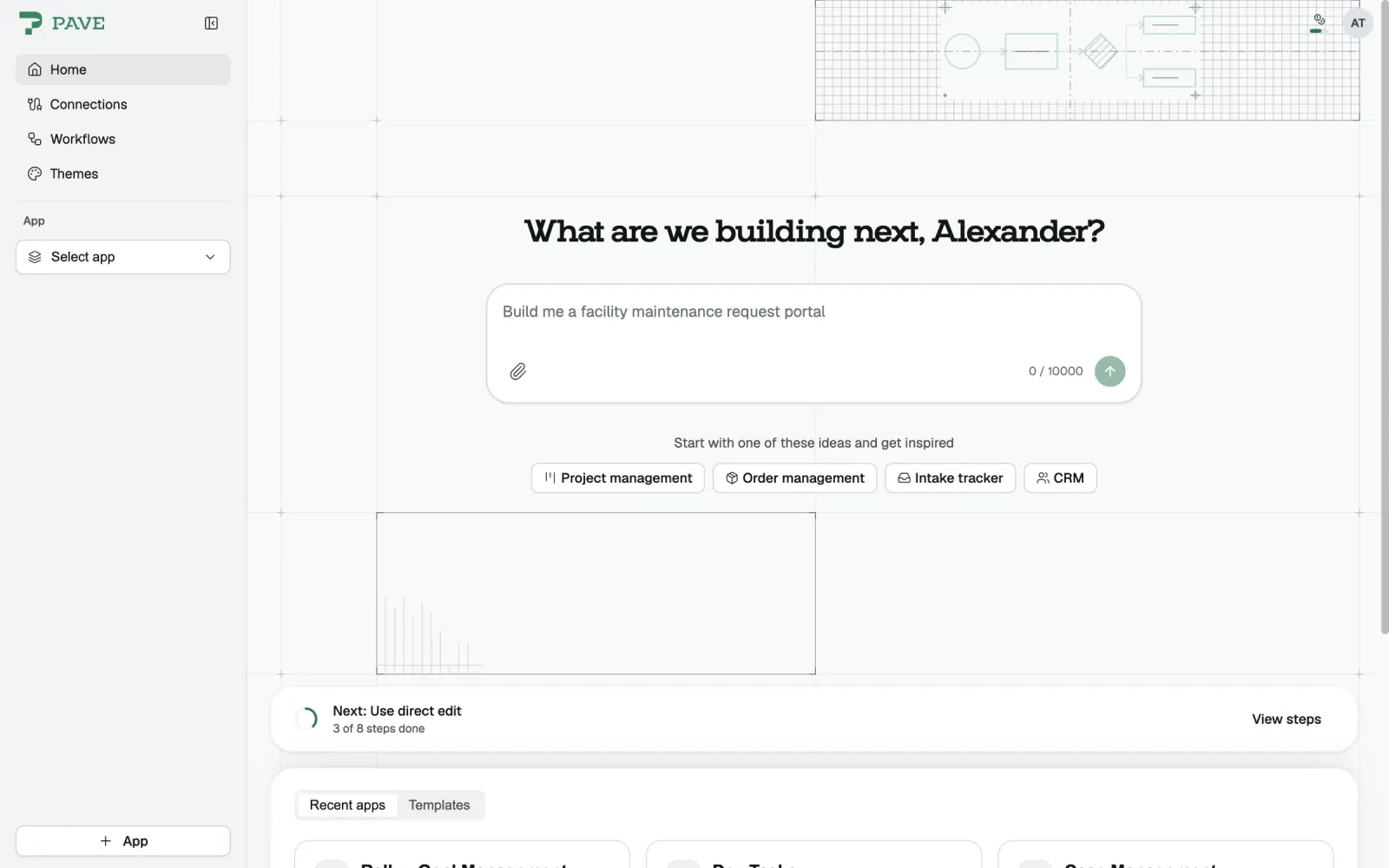
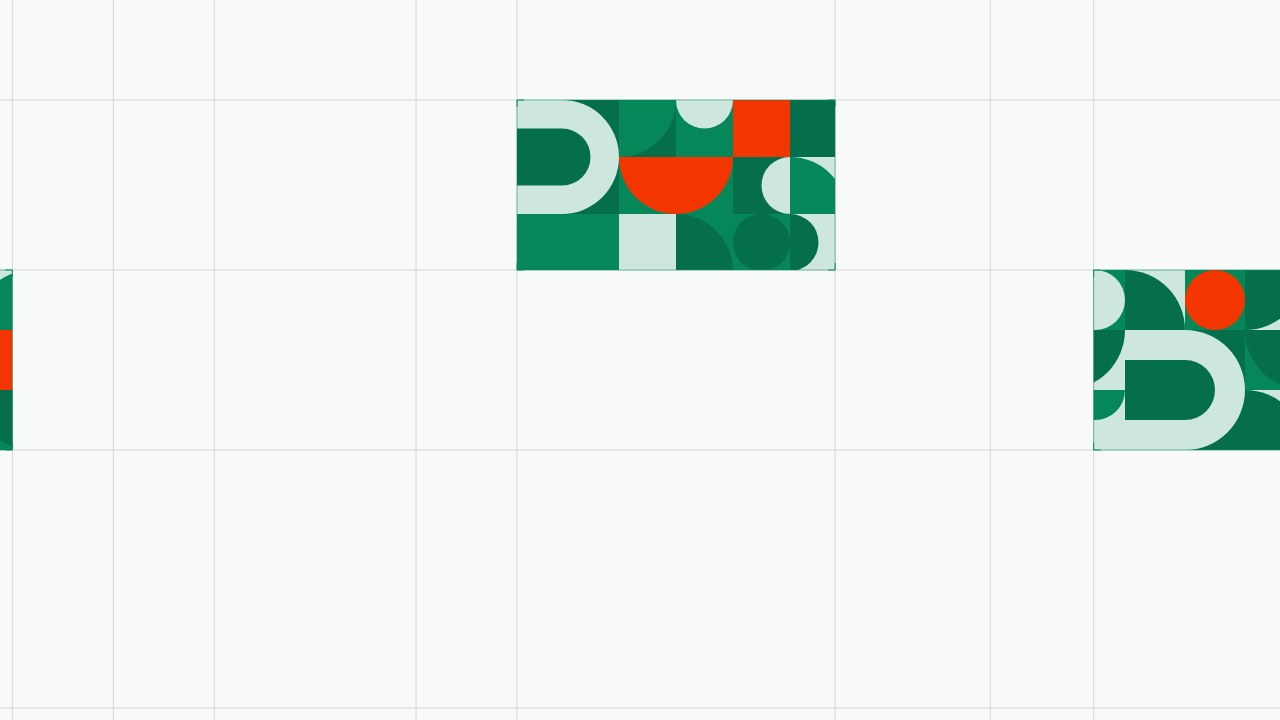
Prototype recording Build-wait motifs and builder context The recorded prototype opens on the builder loading state, then cuts to the fixed-pixel motif set behind it.

Work

Product overview · includes an early workflow prototype Pave in 26 seconds A 26-second overview of Pave's builder, Plan Mode, versioning, Direct Edit, and an early workflow idea from the evolving product.

Designing Pave

Designing Pave's enterprise AI app builder, planning flows, direct editing, and navigation

Background
I joined an engineer-built AI app builder as its first product designer, working across product structure, interaction design and implementation.
Problem
The prompt-to-app loop worked. Planning, precise edits, recovery and navigation still needed to feel like one product people could use with confidence.
Coded prototype · mock product data Plan Mode: clarify, review, approve, build A short coded prototype of clarification, plan review, approval and execution using mock dashboard, task and timing data.
Prototype recording · fabricated product data Direct Edit: select, adjust, continue A short prototype of component-aware selection and direct changes using fabricated product data.

Impact

Public launch
Pave grew from an early alpha into a publicly launched product.
Shipped capabilities
Plan Mode and Direct Edit reached the public product; navigation Phase 1 shipped to production on July 16, 2026.
Read full case study
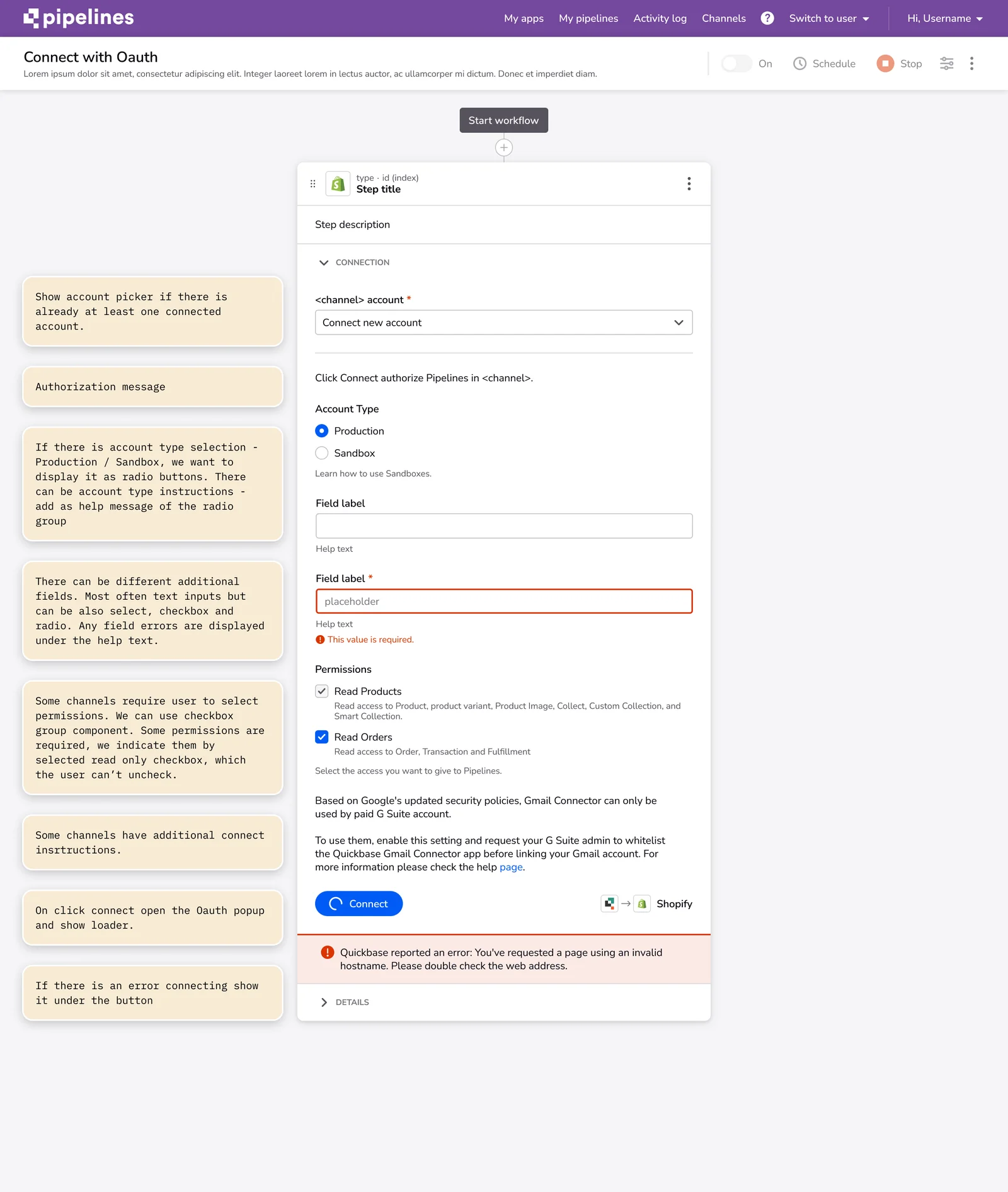
Pipelines OAuth connection design specification showing a reusable account-authorisation pattern.
Design specification · generic sample data One connection pattern for different providers. A reusable OAuth design specification keeps account, permissions, and environment choices visible while allowing provider-specific detail.

Designing trust into Quickbase Pipelines

Three years of Pipelines work across OAuth, editable AI proposals, high-volume automation, troubleshooting, and a code mode for advanced builders.

Background
I designed Pipelines across three years, from reusable connection patterns to AI-assisted creation and expert configuration.
Problem
Builders needed to connect systems, inspect AI proposals, and manage advanced logic without hiding choices that could affect live data.
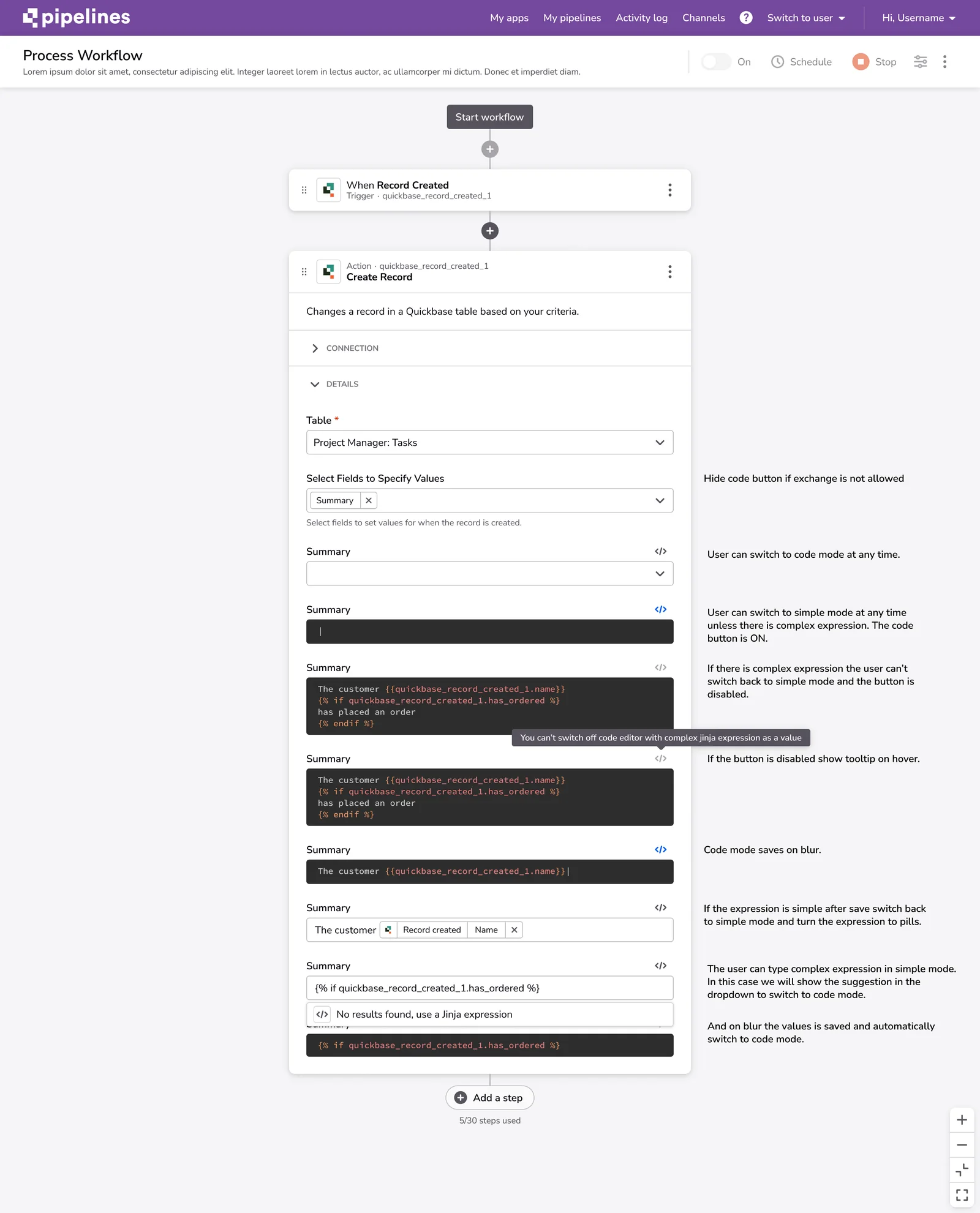
Pipelines code-mode design specification showing an advanced expression editor and locked visual controls.
Design specification · generic sample data An escape hatch with explicit ownership rules. The specification keeps the code and visual representations from silently overwriting each other.

Impact

Observed reach
Across September 11, 2025 to September 11, 2026, 2,826 customer accounts used the all-Pipelines-AI feature set.
Evidence limit
Product-analytics counts show reach and measured follow-through; they do not establish a successful automation or causal design impact.
Read full case study
Connection Central resources-side-panel design specification showing a resource hierarchy and nested relationships.
Design specification · sample data · broader than GA A resource hierarchy for understanding relationships. A broader v2 resources-side-panel design specification, not a sequence or a complete December 2024 GA screen.

Untangling Connection Central

A resources-first redesign of Quickbase Connection Central, shaped by research, narrowed for a December 2024 launch, and shipped without a beta with later adoption evidence.

Background
I rebuilt Connection Central’s information architecture after an earlier version by Johnny Lee had accumulated useful but disconnected views.
Problem
Builders could see individual connections and pipelines but had trouble following what a resource touched and what depended on it.
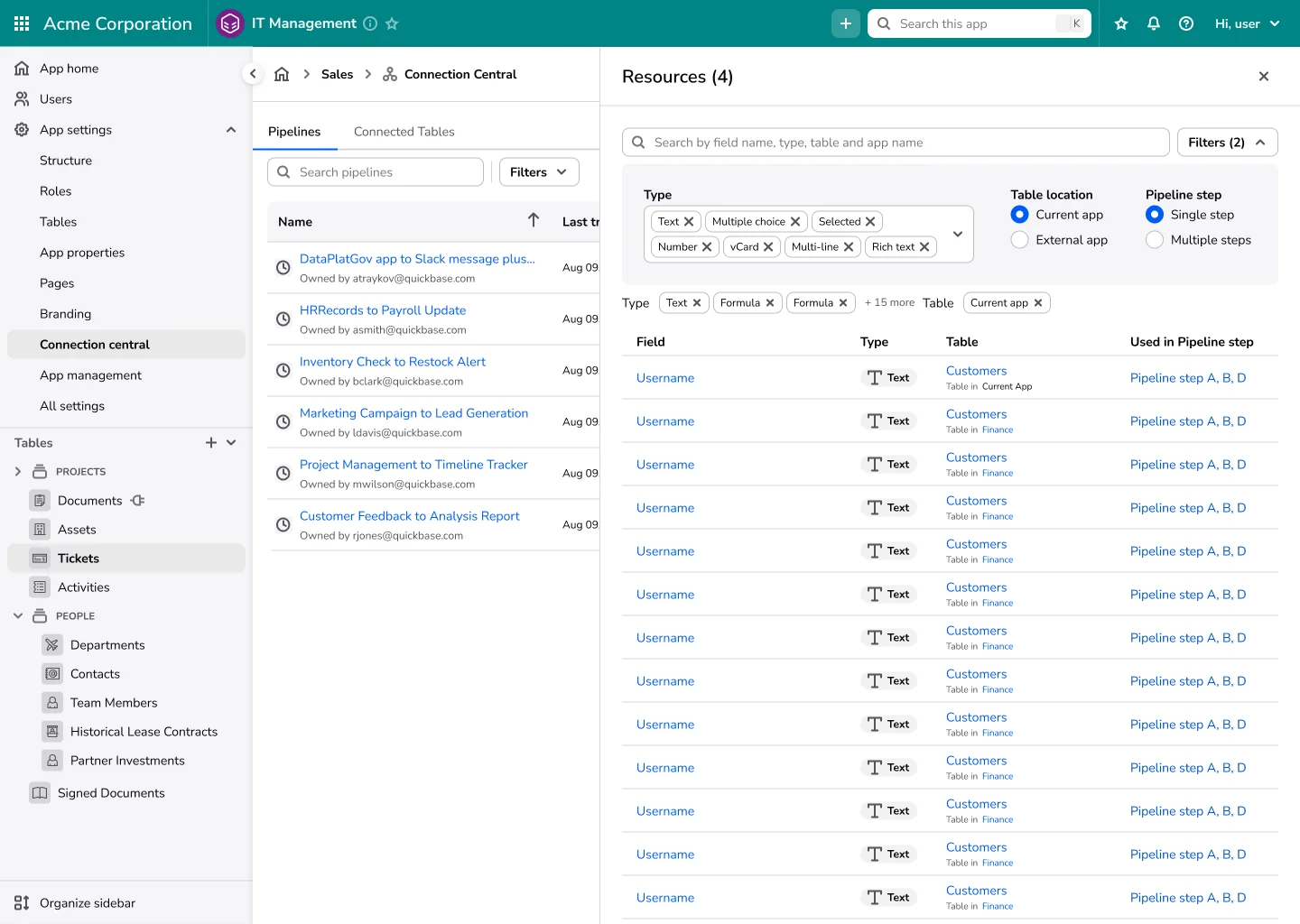
Connection Central two-pane design specification with resources navigation beside a detail pane.
Design specification · sample data · includes deferred concepts Keep the map while inspecting a connection. This broader design specification shows expanded filters and field rows; the detail controls were deferred from the GA release.

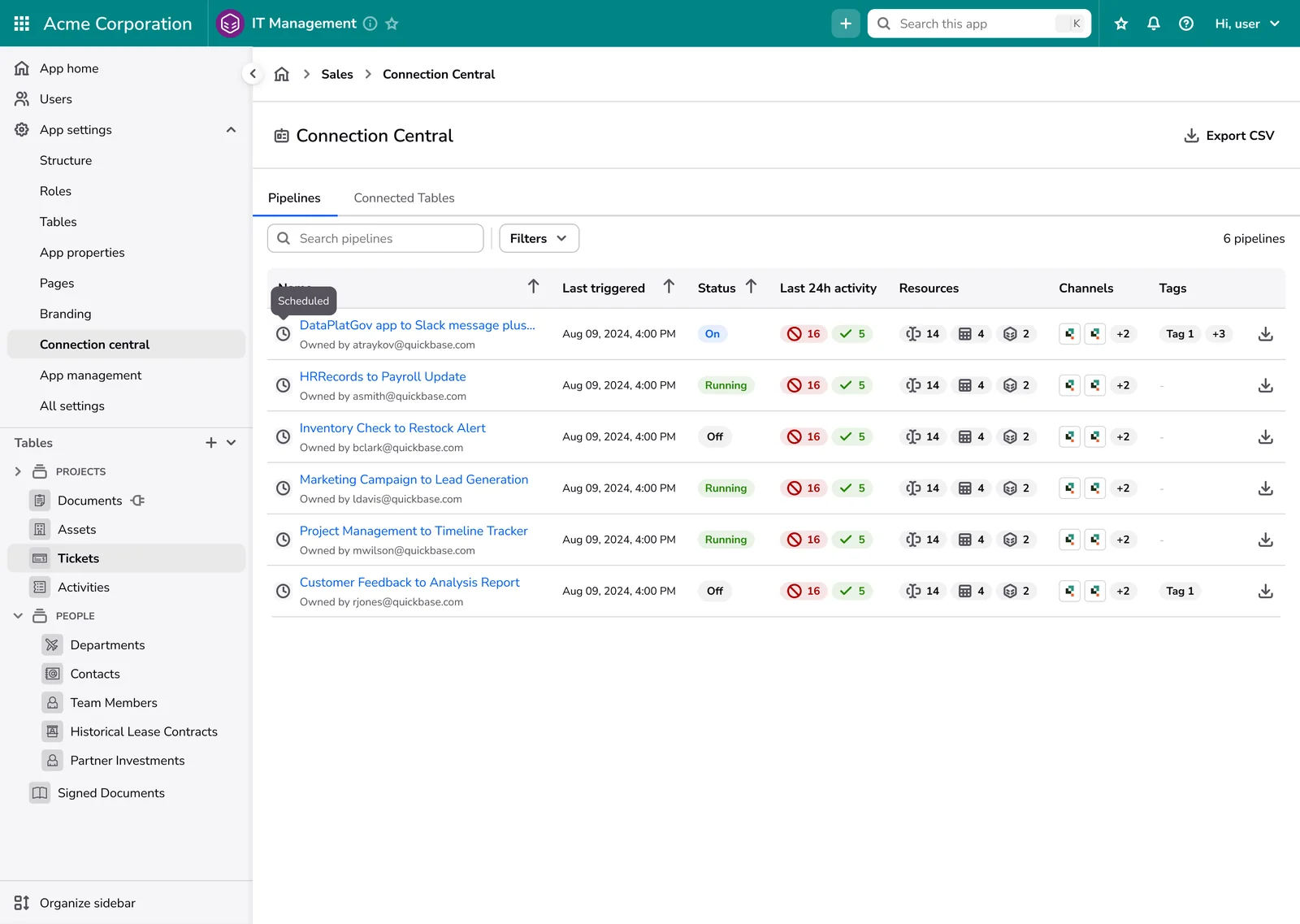
Connection Central Pipelines-list design specification with sample pipeline data.
Design specification · sample data · broader than GA A first-class Pipelines view in the broader v2 model. This is a broader design specification with sample data, not a labelled GA screenshot.

Impact

Research-led structure
A Structured Association study with 13 Solution Architects informed the resources-first model; they were expert proxies, not external customers.
Measured reach
From July 20, 2025 through July 19, 2026, 3,110 accounts used Connection Central. It measures reach, not redesign lift or decision quality.
Read full case study
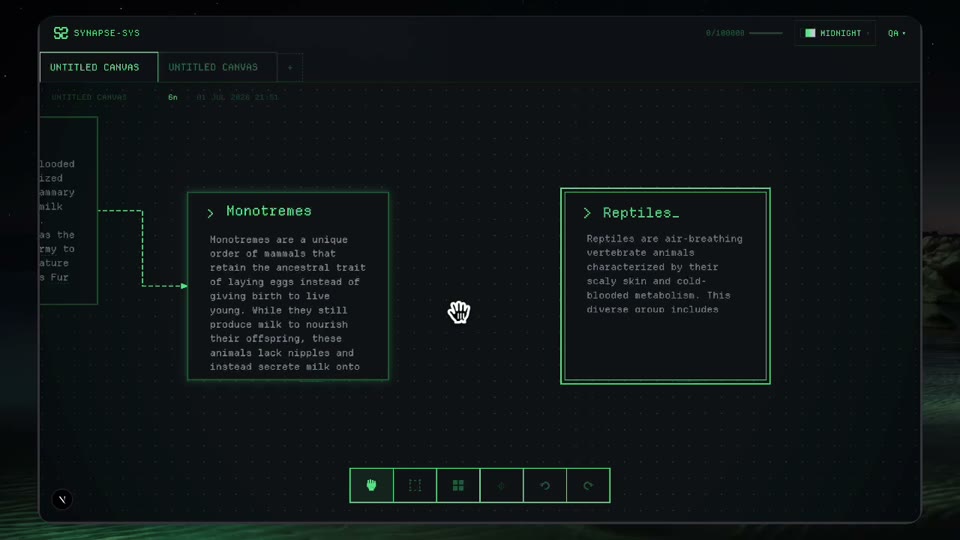
Current local demo · sample content Topic to canvas Explore a topic, inspect a card, and follow its relationships in the current local demo.

Synapse-Sys

Designing and building an AI-powered infinite canvas for research and synthesis in closed beta

Background
I designed and built Synapse-Sys to keep ideas, source material and AI-generated results together on an editable canvas.
Problem
A useful graph needs more than connected boxes. People need to inspect the material, revise it, and understand what an AI operation will act on.
Synapse-Sys local canvas with a card inspector open beside the map.
Current local demo · sample content Edit a card without leaving the canvas. A card inspector stays beside the canvas in the current local demo.
Synapse-Sys local canvas showing a relationship action between two ideas.
Current local demo · sample content Run an operation from the relationship between two ideas. The current local demo surfaces a connection action beside the ideas it will use.